Valle del Nansa Itinerary
The Valle del Nansa Scenic Drive is a relaxed countryside road trip of about 41km that connects the coastal town of Pechón with the mountain village of Tudanca in northern Spain. Plan around 1 day for the journey so you can stop often, walk a bit, and enjoy the rural atmosphere. The best time of year to drive is from late spring to early autumn (roughly May to October), when the weather is mild, the roads are generally clear, and the valleys are at their greenest.
Starting in Pechón, you leave the Cantabrian coast and quickly move into a landscape of rolling hills, meadows, and small forests. Pechón itself is worth a short walk before you set off: the village has a clifftop viewpoint over rugged coves and beaches, and on clear days you can see the Picos de Europa mountains in the distance. The small beaches around Pechón are great for a quick stop if you want to start the trip with some sea air before heading inland.
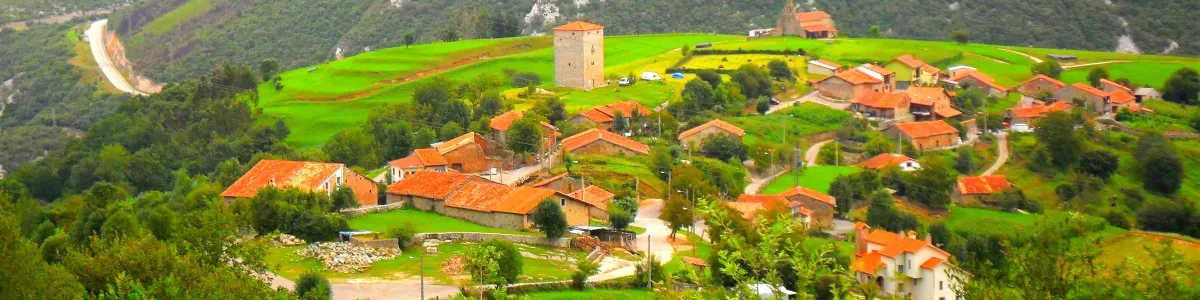
As you follow the Nansa valley, you’ll pass through traditional Cantabrian countryside: stone farmhouses, grazing cattle, small riverside villages, and patches of native woodland. This is not a route packed with big cities or famous monuments, but rather a quiet, scenic drive through genuine rural Spain, with options for short hikes, river stops, and photo breaks at roadside viewpoints.
One of the main towns along the way is Camijanes, a small village that captures the feel of the Nansa valley. Here you can take a short walk through the old streets lined with stone houses, many with wooden balconies and coats of arms from old local families. Nearby, the Nansa River offers spots for picnics and short riverside walks, and anglers sometimes use this area for trout and salmon fishing (check local regulations). There are also small Romanesque chapels and rural churches in the surroundings; while not UNESCO sites, they’re attractive examples of traditional Cantabrian religious architecture and often sit in scenic locations above the valley.
Back on the road, the route gradually gains altitude, with more curves and views as you move deeper into the mountains. The valley is known for its varied birdlife and dense vegetation; if you like photography, there are plenty of places to pull over safely and capture the mix of forested slopes and open pastures. The drive is relatively short in distance, so you can afford to stop often without rushing.
Further along you reach Cosío, another key stop on the Valle del Nansa Scenic Drive. Cosío is a quiet village with classic mountain architecture: big stone houses, wooden balconies, and red-tiled roofs. A standout attraction here is its traditional church (Iglesia de San Juan or local parish church, depending on the exact sector), typically set in a raised position, with views over the valley and nearby hills. Cosío is also a good base for short walks into the surrounding countryside, where you’ll find old paths used by shepherds, small shrines, and viewpoints over the Nansa River. While there are no UNESCO World Heritage sites directly on this route, Cosío and the nearby villages give a strong sense of the traditional way of life in Cantabria’s interior, from small-scale farming to transhumant livestock practices.
From Cosío to Tudanca, the landscape takes on a more pronounced mountain feel. The road winds along slopes and crosses forested areas, with frequent glimpses of steep hillsides and deep valleys. Keep your camera handy here; the combination of stone hamlets, meandering river, and forested ridges is one of the highlights of the drive. On some sections you’ll also notice old bridges, roadside chapels, and stone walls marking ancient property lines, all adding to the sense of history in the valley.
Tudanca, your final destination, is a small, historically significant village with a very well-preserved traditional core. The main must-see here is the Casa-Museo de Tudanca, a historic manor house that once belonged to the writer José María de Cossío. The house is now a museum and cultural site with original furniture, a large library, and a collection of artworks and memorabilia connected to Spanish literary and intellectual life in the 20th century. Walking the streets of Tudanca, you’ll see many noble houses with carved stone coats of arms and wooden balconies, as well as the parish church and small squares that look much as they did centuries ago. The whole village has a strong sense of authenticity and has often been cited as a model of traditional Cantabrian rural architecture.
Although the Valle del Nansa Scenic Drive does not pass directly through any UNESCO World Heritage sites, it lies within a region rich in heritage. If you have extra time before or after the drive, the famous Altamira Cave near Santillana del Mar (a UNESCO site known for its prehistoric paintings) is one of the top cultural excursions in Cantabria and pairs well with the rural and historical atmosphere of this route.
Road conditions along the Valle del Nansa Scenic Drive are generally good, with paved roads throughout, but this is a rural, mountain-influenced area, so you should drive attentively. Expect:
- Curvy sections, especially between Cosío and Tudanca, with some narrow stretches and limited visibility on bends.
- Occasional farm traffic, slow-moving vehicles, and livestock on or near the road (cows, sheep, and sometimes horses).
- Potential wet or foggy conditions outside summer, particularly in early morning or late afternoon, which can reduce visibility and make surfaces slippery.
- Limited services in some stretches, so it’s wise to start with enough fuel and water, and check your brakes and tires before the trip.
With sensible driving and a flexible schedule, the Valle del Nansa Scenic Drive is an easygoing 1-day trip that combines coastline, river valley, and mountain village scenery, offering a calm, authentic look at the rural heart of Cantabria.
 1
number of days
1
number of days
 41 km
route length
41 km
route length
 fair
budget
fair
budget
 family
good for
family
good for
 on the right
traffic direction
on the right
traffic direction
 low
accident level
low
accident level
START
Pechon
Distance 41 km
Driving time 0.9 h
Pace: slow
9.4 kWh
Airports
SDR
[detailsContainer]
Pechón is a tiny coastal village in Cantabria, northern Spain, and a perfect, laid‑back start for the Valle del Nansa Scenic Drive. Perched on a rocky headland between two river estuaries, it’s all about views, quiet lanes and wild beaches rather than big attractions and crowds.
What to see in Pechón
- Mirador de Pechón – Short walk from the village center to a clifftop lookout with sweeping views of the Cantabrian Sea, cliffs and beaches. Great sunrise or sunset spot.
- Playa de Amió – Sheltered sandy cove below the cliffs, popular with locals. Narrow road down but worth it for a swim and the rugged rock formations.
- Playa de Aramal – Wilder, more exposed beach, good for a walk when the tide is low. Park above and follow the path down.
- Old village core – Wander the narrow streets, stone houses and small church; it’s compact but has a genuine, low-key vibe.
From Pechón you can easily hop along the coast to San Vicente de la Barquera or head inland into green valleys, which makes it a solid overnight base for roadtrippers before tackling the Valle del Nansa Scenic Drive.
Closest airport and car rentals
If you’re flying in, the closest international airport is Santander Airport (SDR), roughly 70–80 minutes by car from Pechón, depending on traffic and route.
SDR has on-airport car rental desks from major brands (usually in or next to the arrivals hall) plus several local companies. You can rent anything from small hatchbacks to larger SUVs, ideal if you plan to explore mountain roads and coastal tracks. Pre‑booking online is recommended in summer, as vehicles sell out quickly on busy weekends.
1
Pechon
- Camijanes
Distance 10 km
Driving time 0.2 h
Pace: modest
2.7 kWh
↓
View map
↓
Itinerary
[detailsContainer]
Starting in Pechón, you kick off this short 10 km leg with the sea right at your back and a relaxed vibe in the air. Before you roll out, wander through Pechón’s little core and head towards the viewpoints above the coast, where you get those wide, rugged-ocean panoramas that are perfect for a last look before driving inland. It’s worth taking a few minutes to stretch your legs here and soak up the Atlantic breeze before getting behind the wheel.
On the way to Camijanes, keep your eyes on the scenic road: in some sections the road is very winding and in sections the road will be narrow, so it pays to take it slow and just enjoy the changing views. You’ll cover the distance in fewer than 1 hour, with plenty of time to stop for photos along the way.
Rolling into Camijanes, the pace eases again. Park up and wander through the village streets, then look for spots where you can peek out over the surrounding countryside, with its mix of green slopes and quiet rural corners. It’s a great place to wind down this stage and plan what’s next.
More information regarding attractions, accommodation options, recommended restaurants, and campsites along the route is available in the "Itinerary" of this stage.
 Camijanes - Spain - Europe - Scenic Drive
❯
❮
2
Camijanes
- Cosio
Distance 16 km
Driving time 0.3 h
Pace: modest
4.1 kWh
↓
View map
↓
Itinerary
[detailsContainer]
Starting from Camijanes, this 16 km hop to Cosio is a relaxed drive of under an hour, perfect for taking it slow and soaking up the scenery.
Roll out of Camijanes and enjoy the peaceful village vibe before hitting the road. As you leave, pay attention to the scenic road unfolding ahead; in some sections the road is very winding and in sections the road will be narrow, so it’s worth driving calmly and looking out for oncoming traffic. The changing views and bends make it a fun ride for road-trippers who like a bit of character in their route rather than just straight highway.
Arriving in Cosio, take time to wander its quiet streets and traditional houses, where the mountain setting really frames the village. It’s a great place to stretch your legs after the curves and narrow stretches, breathe in the fresh air, and enjoy the slow pace before you move on to your next driving day.
For more details about attractions, accommodation options, recommended restaurants, and campsites along this route, check the "Itinerary" of this stage.
Cosio - Spain - Europe - Scenic Drive
❯
❮
3
Cosio
- Tudanca
Distance 15 km
Driving time 0.4 h
Pace: slow
3.4 kWh
↓
View map
↓
Itinerary
[detailsContainer]
Rolling out of Cosio, you’re in for a short but memorable hop to Tudanca, about 15 km and under an hour of easy driving. Before you hit the road, take a little time to wander Cosio itself: the village streets, stone houses, and quiet corners are perfect for stretching your legs and snapping a few photos before driving on.
Once you leave Cosio, the road quickly turns into a scenic ride through a green valley landscape. Keep your eyes on the views, but also on the asphalt: in some sections the road is very winding, and in sections the road will be narrow, so you’ll want to take it slow and enjoy the curves rather than rush them.
Rolling into Tudanca, park up and explore on foot. The traditional houses and calm village atmosphere feel like stepping back in time, and it’s a great place to relax after the drive, grab a drink, and just soak up the setting before your next driving day.
For more details on attractions, accommodation options, recommended restaurants, and campsites along this route, check the "Itinerary" of this stage.
Tudanca - Spain - Europe - Scenic Drive
❯
❮
Tudanca
[detailsContainer]
Tudanca is a tiny mountain village in Cantabria, northern Spain, and the perfect low-key finale for the Valle del Nansa Scenic Drive. After winding along the wild Nansa River, you roll into a place that feels pretty much frozen in time: stone houses with wooden balconies, super narrow lanes, and zero big-city noise.
The whole historic core is walkable, so park on the edge of town and wander. Don’t miss the traditional casonas montañesas (those big manor houses) scattered through the village; some have impressive coats of arms and creaky old balconies that make great photo ops. The Parish Church of San Juan Bautista is small but atmospheric, and the surrounding cemetery has wide-open views over the valley.
If you’re into history, track down the spots linked to writer José María de Pereda, who used Tudanca and the Nansa Valley as inspiration for his novels. The village also has a strong ranching tradition—“Tudanca” is actually the name of a local cattle breed—so you’ll likely see herds grazing on the slopes around town.
For roadtrippers, the best part of Tudanca is what’s just outside it: twisty, scenic roads climbing into the hills, plus riverside pullouts where you can stop, kill the engine, and just listen to the water. There are signed hiking routes from the village if you want to stretch your legs after the drive. Food-wise, look for simple local joints serving hearty mountain dishes—stews, cheeses, and cured meats—ideal after a day of curves and viewpoints.
If you’re flying in, the closest international airport is Santander Airport (SDR), about 1.5–2 hours away by car, making Tudanca a sweet, quiet end point to a classic northern Spain road trip.
Valle del Nansa at a glance
-
Start:
Pechon
-
End:
Tudanca
-
Distance:
41 km
-
Stay:
1 day
-
Getting there:
Santander Airport (SDR)
-
When to drive:
May, June, July, August, September, October
-
More info:
More info you can find in the "Itinerary" section at each stage.

 -
-