Costa da Morte Itinerary
The Costa da Morte Scenic Drive is a roughly 140km coastal road trip in Galicia, Spain, running from Malpica to Fisterra and best enjoyed over about 2 days. It strings together wild Atlantic cliffs, quiet fishing ports and long, windswept beaches. The best time to drive it is late spring to early autumn (May–October), when the weather is milder, days are longer and coastal fog is usually less of an issue, though even then you should be ready for sudden changes in wind and rain typical of the Atlantic coast.
Malpica, your starting point, is a compact fishing town with a working harbour, narrow backstreets and views to the Sisargas Islands just offshore. It’s worth walking down to the port to watch the small fishing boats come in and to check out the simple seafood bars that serve whatever was landed that day. The nearby beaches, like Area Maior, are good for a first taste of the wild Costa da Morte landscape, with strong waves and often dramatic skies.
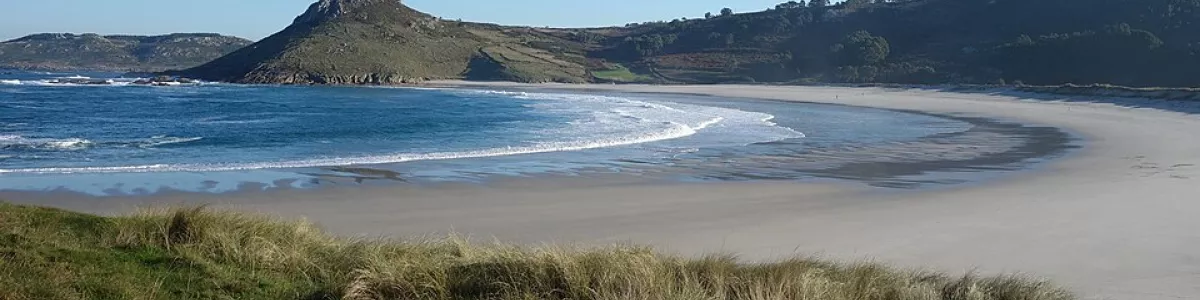
From Malpica, you follow small, twisting regional roads west and south. The first main stop is Laxe, a quiet coastal town wrapped around a wide, pale-sand bay. Laxe’s main beach is long and usually not crowded, so it’s easy to step out of the car and get your feet in the sand. Above town stands the lighthouse of Laxe, sitting on rugged rocks with open Atlantic views and good sunset light. There are also granite rock formations and small coves nearby, and the whole area gives a good sense of how isolated and windswept this coast can feel. In the village, whitewashed houses and a simple seafront promenade keep the atmosphere low-key and local.
Continuing along the coast, you reach Camariñas, another classic Costa da Morte fishing port. The town sits on a sheltered ría (coastal inlet), so the water is calmer here than out on the open Atlantic. Camariñas is known for its traditional bobbin lace (encaixe), and you’ll see small workshops and shops where lace is still made and sold. A short drive beyond town takes you to Cabo Vilán, one of the most impressive headlands on the route. The lighthouse here stands on a high, rocky promontory hammered by waves, and a short walk around the site offers cliff-edge views and a sense of how dangerous this coast has historically been for ships. Interpretive panels explain some of the maritime history and shipwrecks along the “Coast of Death.”
Following the shoreline further south, the road gradually leads you to Muxía, a place that mixes strong seafaring and religious traditions. The key attraction is the Santuario da Virxe da Barca, a sanctuary perched right on the ocean’s edge. It’s a stark stone building facing the full force of the Atlantic, with huge smooth boulders scattered around it. The setting is dramatic, especially on windy days when waves crash against the rocks. Muxía is also a terminus for some Camino de Santiago routes, so you may see pilgrims arriving on foot. The small town itself has a relaxed feel, with simple seafood places and a harbour where fishing boats and small yachts share the water. Nearby coastal paths give easy access to viewpoints over cliffs and coves.
From Muxía, the last stretch of the drive takes you towards Fisterra (Finisterre), traditionally known as “the end of the world.” The road continues to roll through rural landscapes, with patches of forest, small hamlets and occasional glimpses of the sea. Arriving in Fisterra, you can explore the old town around the port, where fishing remains a big part of daily life, with nets drying on the quayside and modest bars offering hearty Galician dishes. The must-see attraction here is the Cabo Fisterra lighthouse, set on a high headland reached by a short, scenic drive from town. Many pilgrims from the Camino continue on to this point, treating it as a symbolic end of their journey, and the rocky slopes around the lighthouse are popular for sunset. The panoramic view takes in the open Atlantic and, on clear days, a long stretch of rugged coastline in both directions.
Along this route there are no UNESCO World Heritage sites directly on the road itself, but you are travelling through a region closely linked to the broader Camino de Santiago pilgrimage area, whose historic routes and monuments are protected by UNESCO. Even if you’re not walking the Camino, you’ll feel its presence in places like Muxía and Fisterra, where waymarkers, pilgrims and small chapels form part of the landscape.
Driving conditions on the Costa da Morte Scenic Drive are generally good, with paved roads throughout, but you should be prepared for narrow, winding stretches, occasional steep sections and limited visibility in fog or heavy rain. Weather can change quickly, especially outside the summer months, and strong coastal winds are common near headlands. Livestock or tractors may appear on rural stretches, and in high season some small coastal roads can be busy with local traffic and campervans. Take it slowly, plan fuel stops in the bigger towns, and avoid driving fast at night, as some areas have minimal lighting and sharp bends. With a relaxed pace and a bit of caution, this two-day drive offers a rewarding way to experience one of Spain’s wildest and most atmospheric coastlines.
 2
number of days
2
number of days
 140 km
route length
140 km
route length
 fair
budget
fair
budget
 family
good for
family
good for
 on the right
traffic direction
on the right
traffic direction
 moderate
accident level
moderate
accident level
START
Malpica
Distance 140 km
Driving time 3.6 h
Pace: slow
32.2 kWh
Airports
SCQ
,
LCG
[detailsContainer]
Malpica de Bergantiños is a small fishing town on Spain’s wild Galician coast, perfect as a starting point for the
Costa da Morte Scenic Drive.
The heart of Malpica is its working harbor. Park up and wander the waterfront to watch fishing boats come and go and grab super-fresh seafood in the bars around the port. The town beach,
Praia de Malpica, sits right in front of the houses, so you can take a quick swim or just chill with a coffee overlooking the sand.
Off the coast you’ll see the
Islas Sisargas, a small island group with a lighthouse and big Atlantic swells crashing against the cliffs. You can’t always visit, but the views from town and nearby viewpoints are worth the stop, especially around sunset.
If you have time, drive a few minutes out to:
- Seiruga Beach – wide, less crowded, great for a walk at low tide.
- San Adrián de Malpica – a small chapel and viewpoint with big ocean panoramas.
Malpica’s old town is a compact maze of narrow streets climbing the hill from the port. It’s easy to explore on foot and gives you that authentic, slightly rough-around-the-edges fishing-village vibe that defines this part of Galicia.
If you’re flying in, the closest international airport is
A Coruña Airport (LCG), roughly an hour’s drive from Malpica. At LCG you’ll find the usual on-airport car rental desks (major brands like Avis, Europcar, Hertz, Enterprise, plus some local outfits). Booking ahead is smart, especially in summer, so you can land, pick up your car, and head straight out toward Malpica and the Costa da Morte.
1
Malpica
- Laxe
Distance 44 km
Driving time 1.0 h
Pace: modest
11.5 kWh
↓
View map
↓
Itinerary
[detailsContainer]
Starting in Malpica, this 44km hop to Laxe (under 1 hour of driving) is all about soaking up the Atlantic vibe at an easy pace.
Before you roll out, stretch your legs around the harbour in Malpica, watching the fishing boats and the waves crashing against the breakwater. It’s a great place for a quick seaside stroll and a coffee with a sea view before hitting the road.
Once you’re driving, keep an eye on the scenic road ahead: the coastline keeps appearing and disappearing between hills, and in some sections the road is very winding, so it’s worth slowing down to enjoy the views. You’ll also find that in sections the road will be narrow, so take it easy, especially on bends where the ocean suddenly shows up beside you.
Rolling into Laxe, head straight for the long sandy beach and the waterfront promenade. Park up and wander along the shore, or climb a little higher around town to catch those wide ocean panoramas that make the drive worth it. The relaxed seaside feel here is perfect for ending the day with a walk by the water.
More info about attractions, accommodation options, recommended restaurants, and campsites along the route is available in the "Itinerary" of this stage.
 Laxe - Spain - Europe - Scenic Drive
❯
❮
2
Laxe
- Camarinas
Distance 38 km
Driving time 1.2 h
Pace: slow
8.7 kWh
↓
View map
↓
Itinerary
[detailsContainer]
Leaving Laxe, you’ll roll out along about 38 km of pure coastal joy, with fewer than 2 hours of easy driving ahead of you if you allow time for photo stops and small detours. As you climb out of town, keep an eye on the scenic road: in some sections the road is very winding and in sections the road will be narrow, so take it slow and enjoy the sea views unfolding around every bend.
Before hitting the main stretch, wander through Laxe itself. Park up and stroll its relaxed streets, then head down to the long sandy beach to stretch your legs and breathe in the Atlantic air. It’s a great place for a quick coffee stop before you get back behind the wheel.
Approaching Camariñas, the scenery stays dramatic. Once you arrive, wander the harbor area and watch the fishing boats, then dive into the local lace-making tradition in town, where you can see intricate handiwork and maybe pick up a small souvenir. The village vibe, colorful houses, and ocean backdrop make a perfect end to this stage.
More info on attractions, accommodation, recommended restaurants, and campsites along the route is available in the Itinerary of this stage.
Camarinas - Spain - Europe - Scenic Drive - Wikimedia Commons
❯
❮
3
Camarinas
- Muxia
Distance 25 km
Driving time 0.5 h
Pace: modest
6.5 kWh
↓
View map
↓
Itinerary
[detailsContainer]
Leaving Camariñas, you’ll roll out of this laid‑back fishing town with the ocean never far from sight. Before you hit the road, wander the waterfront and soak up the port atmosphere, then drive out to the impressive lighthouse of Cabo Vilán. It’s a perfect stop for photos and a short walk, with raw Atlantic views that set the tone for the day.
The drive to Muxía is about 25 km and takes fewer than 1 hour, but you’ll want to take it slow. The road is scenic almost the whole way, with constant glimpses of rugged coastline and small Galician hamlets. Stay alert: in some sections the road is very winding, and in sections the road will be narrow, so it’s worth keeping your speed down and enjoying the views.
Rolling into Muxía, head straight for the Santuario da Virxe da Barca, perched dramatically by the waves. The combination of ocean, rocks, and the small sanctuary makes this a standout stop at the end of the stage, especially around sunset.
More information regarding attractions, accommodation options, recommended restaurants, and campsites along the route is available in the Itinerary of this stage.
Muxia - Spain - Europe - Scenic Drive - Wikimedia Commons
Muxia - Spain - Europe - Scenic Drive - Wikimedia Commons
❯
❮
4
Muxia
- Fisterra
Distance 33 km
Driving time 1.0 h
Pace: slow
7.6 kWh
↓
View map
↓
Itinerary
[detailsContainer]
Starting in the oceanside town of Muxía, you’ll roll out with the Atlantic always close by and the promise of Fisterra on the horizon. The distance is about 33 km and you’ll cover it in under an hour, but it’s worth taking it slow. As you leave Muxía, keep an eye on the road: in some sections the road is very winding and in sections the road will be narrow, so it pays to stay focused while you enjoy the ride.
All along the way, the drive treats you to picturesque landscapes and a scenic road that constantly tempts you to pull over for photos. Approaching Fisterra, the sea opens up again and the views become even more dramatic, especially as you head toward the famous headland. Rolling into Fisterra feels like reaching the end of the world, with the ocean stretching endlessly ahead and the sky putting on a show at sunset.
This drive connects two truly special coastal spots and fits perfectly into a longer adventure by car. For more details on attractions, accommodation options, recommended restaurants, and campsites along the route, check out the “Itinerary” of this stage.
Fisterra - Spain - Europe - Scenic Drive - Wallpaperflare
❯
❮
Fisterra
[detailsContainer]
Fisterra (often spelled Finisterre) is a tiny Atlantic town at the far western tip of Spain, and the perfect finale for your Costa da Morte Scenic Drive. The name literally means “end of the earth,” and when you’re standing on the cliffs watching waves slam into the rocks, it really does feel like the edge of the world.
Rolling into town, park up and wander the old harbor area first. Fishing boats, nets drying in the sun, and low‑key bars give you that classic Galician port vibe. From there, the must‑do drive is up to the Cape Fisterra Lighthouse. The road winds along the ridge with killer ocean views, and at the top you get panoramic cliffs, a dramatic drop to the sea, and some of the best sunsets on the coast. Stick around for blue hour; it’s worth it.
Back in the village, stroll to the Church of Santa María das Areas, a simple, stone church tied to centuries of pilgrim legends. If you’ve got time, hit one of the nearby beaches—Playa Langosteira is the easy pick, a long, curved bay that’s perfect for a quick swim or a chill walk after hours behind the wheel.
Roadtrippers will appreciate that Fisterra is compact and easy to navigate, with plenty of scenic pull‑offs around town. Fuel stations and small supermarkets are nearby, but this is still the wild coast—plan your gas and snacks ahead of time, especially if you’re exploring smaller side roads along the Costa da Morte.
If you’re flying in to start (or end) your trip, the closest international airport is in A Coruña (IATA: LCG), about a couple hours away by car, making it a solid gateway to launch your Costa da Morte Scenic Drive and roll all the way to Fisterra’s “end of the earth.”
Fisterra - Spain - Europe - Scenic Drive - Wikimedia Commons
❯
❮
Costa da Morte at a glance
-
Start:
Malpica
-
End:
Fisterra
-
Distance:
140 km
-
Stay:
2 days
-
Getting there:
Santiago de Compostela Airport (SCQ),
A Coruña Airport (LCG)
-
When to drive:
May, June, July, August, September, October
-
More info:
More info you can find in the "Itinerary" section at each stage.

 -
-